
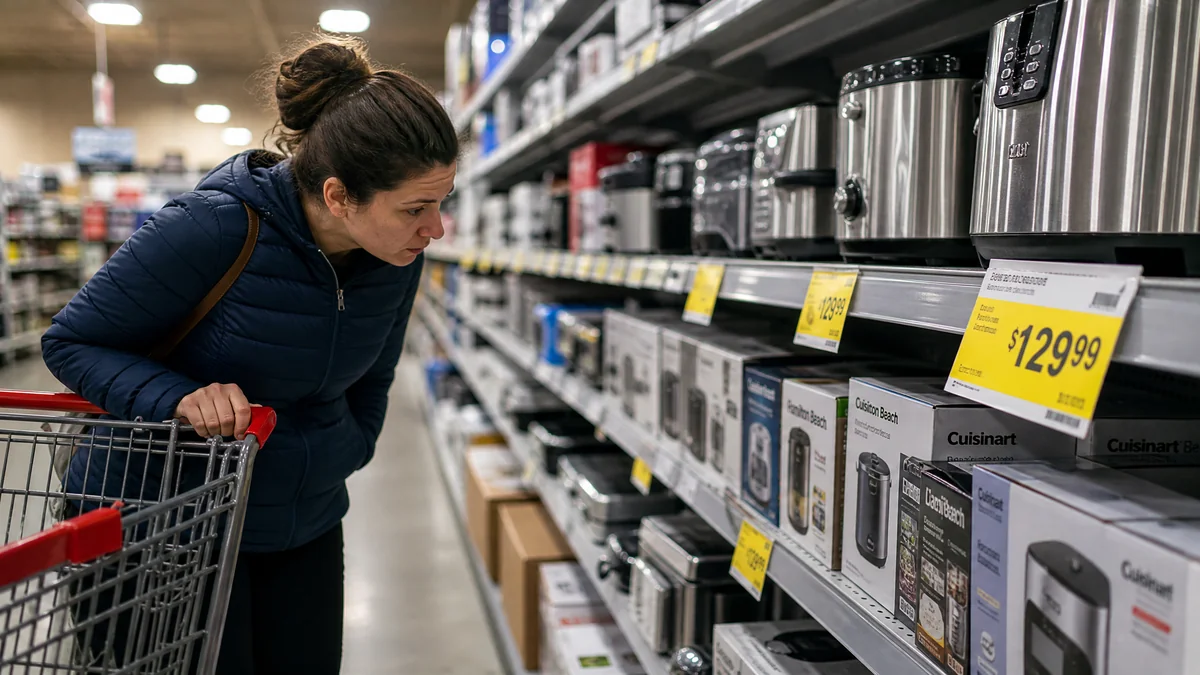
You didn’t get a letter about it. There was no announcement on your phone. But if your grocery bill, appliance prices, or clothing costs have felt a little off lately, you’re not imagining it.
Tariffs are back in a big way in 2026 — and they’re quietly raising the price of a lot of everyday things most people never think to track.
A tariff, in plain terms, is a tax the government charges on goods brought in from other countries. When that tax goes up, companies don’t eat the cost. They pass it on to you at the register.
So let’s talk about what’s actually getting more expensive, what you can do about it right now, and how to stop this from quietly wrecking your budget.
What’s Getting Hit the Hardest
Electronics, appliances, clothing, and tools are all categories to watch. A huge portion of these products are manufactured overseas — mostly in Asia — and tariffs on those imports have climbed significantly.
Think about the last time you needed a new washing machine, a laptop, or a decent pair of work boots. These are exactly the kinds of purchases where a 10–25% tariff increase quietly adds $50, $100, or even $300 to the final price tag.
Groceries are trickier. Some food categories — canned goods, cooking oils, certain produce — are affected depending on where they’re sourced. It won’t look like a tariff. It’ll just look like prices went up again.
Steel and aluminum tariffs have also pushed up the cost of cars, home improvement materials, and outdoor equipment. If you’ve been putting off a fence, a new grill, or any kind of home project, that delay is probably costing you more than you’d expect.
Front-Load the Big Purchases
This is the clearest move you can make right now: if you know you need something in the next 6–12 months, buy it sooner rather than later.
Appliances heading toward end of life? Replace them now. Same with tools, outdoor gear, or any tech purchase you’ve been putting off. Prices on these categories are expected to stay elevated or climb higher through most of 2026. Waiting won’t save you money. It’ll cost you.
This isn’t panic-buying. It’s timing. There’s a difference.
Swap Before the Spike
Look at your regular spending and ask a simple question: is there a domestic (made in the USA) or tariff-exempt version of this?
For some products, yes. American-made clothing brands, local farmers markets, and domestically produced goods aren’t just feel-good options — right now, they’re often the cheaper option compared to imported alternatives with tariff markups baked in.
Not everything has a domestic swap. But enough categories do that it’s worth a quick look before you buy.
Tighten the Household Budget — Specifically
Don’t just “spend less.” That’s too vague to actually work.
Go category by category. Look at where your money went last month. Identify which categories are directly affected by tariffs — clothing, electronics, home goods — and set a conscious ceiling on each one for the next six months.
If you’re not tracking your spending yet, now is a good time to start. There are free apps that connect to your bank and show your spending by category automatically. You don’t have to do the math yourself. You just have to look at the numbers. If you’re also looking for a smarter place to park your savings while you tighten up, a high-yield savings account in 2026 is one of the easiest moves you can make right now.
The Silver Lining Nobody Mentions
When everyday prices go up, people get smarter about money. It’s an annoying way to learn, but it tends to stick.
Tariffs are forcing a lot of people to stop buying impulsively and start buying intentionally. That habit — buying less, buying better, buying when it makes sense — is one of the most underrated money skills there is.
If any of this is hitting close to home, you’re not alone. A lot of people are realizing right now that earning good money doesn’t automatically mean building wealth — and that the gap between income and savings is a behavioral problem as much as a financial one.
Ben Franklin had a line for this kind of moment: “Beware of little expenses; a small leak will sink a great ship.” In 2026, the leaks are getting bigger. Time to find them before they find you.








One Comment